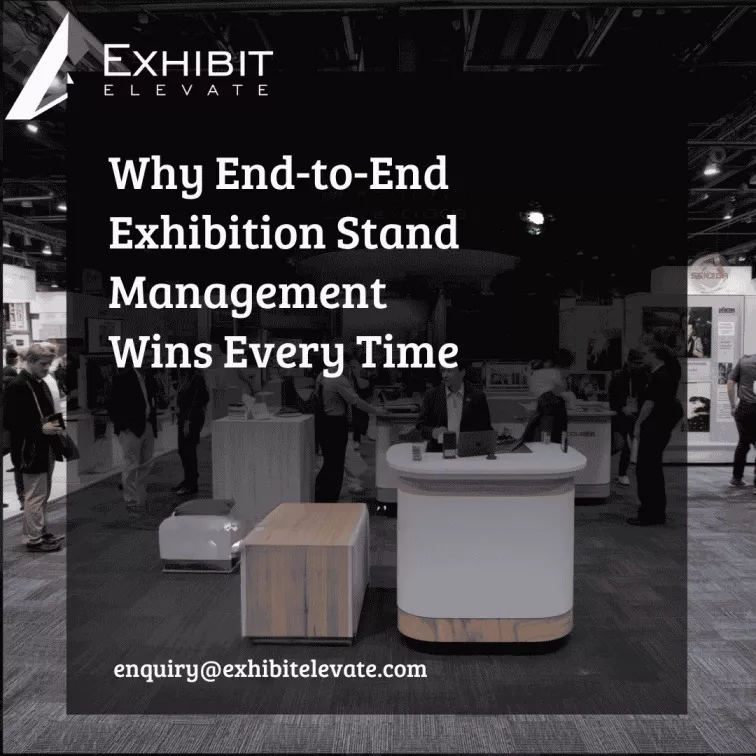
The most significant feature of every successful trade fair is the exhibition booths. They are the face of a company and the location where people form initial impressions. But there is a process behind every booth that captures the eye that requires imagination, engineering, and strategic planning. Every phase, from the first sketch of the idea to the final setup on the exhibition floor, is vital for converting an idea into a powerful brand experience.
We at Exhibit Elevate realize that excellent exhibition stand design and construction don’t just happen. They are carefully planned and created via teamwork, creativity, and attention to detail. In this post, we’ll show you the complete process of building exhibition stands, from the idea to the finished result.
1. The Vision: Coming up with ideas
Every trade show booth starts with a vision of how your brand should seem and feel. This is where the creative process begins. The client’s ambitions, brand identity, and target audience are spoken about in depth to work out what the stand needs to do.
At this time, designers are largely concerned with these essential questions:
- What should the stand say?
- What kind of experience should individuals have when they step inside?
- What is the greatest way to lay things up such that they are as visible and intriguing as possible?
To assist people visualize the earliest concepts, mood boards, sketches, and digital mock-ups are developed. This step is the base for custom show stand design, where creative ideas and strategic thinking come together. The idea is to turn brand goals into visual storytelling that catch people’s attention and help them connect.
2. Designing with Purpose
Once the idea is determined, the design step really starts going. This is where being creative and being realistic come together. The design team uses modern 3D rendering technologies to make the stand look lifelike.
This is what this stage entails:
- Space Planning: Knowing how much floor space you have and making the most of it to improve the flow of guests.
- Brand Integration: Using colors, logos, lighting, and materials that fit with the brand image.
- Functionality: Making areas for meetings, demos, storage, and presentations.
During the design and build phase of the exhibition stand, designers, engineers, and project managers must work together to make sure that the idea can be translated into a genuine, structurally sound arrangement.
The goal is to produce an amazing and effective structure that ideally symbolises the business, whether it’s a custom exhibition stand design for a huge trade show or a modular exhibition stand design that can be used at many various events.
3. Engineering Accuracy: Materials and Technical Drawings
It’s time to move on to the technical step once the design is accepted. Engineers generate precise drawings that show the dimensions, materials, lighting, and structural features.
Some essential components of this stage are:
- Material Selection: Picking materials that are robust but light, such aluminum, MDF, acrylic, or cloth, for the framework and graphics.
- Lighting Design: Planning how spotlights, LEDs, and ambient lighting will draw attention to crucial places.
- Structural Analysis: Making sure the display area is safe and stable.
At this step, the design becomes a blueprint that can be built. The precision of this phase will determine how smoothly the construction of the display stand goes later.
4. Bringing the Design to Life
This is when the idea gets from the computer screen to the workshop. During the manufacture of exhibition stands, professional artisans, carpenters, and fabricators work together to produce each aspect of the stand.
The process includes:
- Carpentry and Joinery: Making the main frame and panels.
- Painting and Finishing: Adding brand colors, laminates, or textures to make things seem nicer.
- Graphic Printing: Making signs and graphics that look beautiful and create an impact.
- Lighting and Electricals: Setting up wiring and lighting systems for screens or interactive elements.
Before the stand is shipped to the event, every detail is meticulously reviewed to make sure it is excellent.
Exhibit Elevate makes sure that every part of the exhibition stand production process is of the highest quality, so that every part shows off craftsmanship and brand integrity.

5. Seamless Coordination: Managing the Exhibition Stand Project
Project managers are highly vital behind the scenes to make sure everything goes well. Managing an exhibition stand project includes getting designers, builders, logistics teams, and the customer to work together to fulfil deadlines and keep quality high.
A dedicated project manager takes charge of:
- Timelines and planning
- Managing the budget and getting materials
- Teams talking to each other
- Following the rules of the location
Good management makes sure that the project moves smoothly from design to delivery, with no delays or last-minute surprises.
6. The Big Day: Exhibition Stand Setup and Dismantling
Once all the parts arrive at the trade show, it’s time to put the display stand together. The professional installation workers put everything together, set up the lighting, and added the final touches to make the design seem just like it was supposed to.
This step has:
- Taking apart and putting back together the parts of a structure
- Adding furniture, lights, and graphics
- Checking the digital screens, electrical systems, and interactive elements
The team is in charge of taking down the exhibition stand after the event. They make sure that everything is packed up safely so it can be stored or used again. Modular designs make it easy to move parts around for future shows. This is good for the environment and saves money.
7. Custom vs. Modular: How to Pick the Best Design Method
You can construct display stands in two main ways: by designing your own exhibition stand or by using a modular exhibition stand design.
- Custom Exhibition Stands: You can be as creative as you want with these stands because they are built just for one company or event. They are perfect for businesses who want to be noticed and stand out.
- Modular Exhibition Stands: These stands are meant to be flexible, and you may put them together in many ways with pre-made parts. They are perfect for companies who go to a number of exhibitions each year.
Exhibit Elevate gives clients both choices, making ensuring that their branding, budget, and goals are all accomplished in style and with accuracy.
8. Sustainability in Exhibition Stand Construction
More and more, making modern exhibition stands is about being beneficial for the environment. Brands today are more cognisant of sustainability and chose buildings that can be used again, materials that can be recycled, and lights that use less energy.
Not only can making choices that are healthy for the environment assist the world, but it also makes your brand look better. Modular systems and eco-friendly materials can help companies save money and promote good exhibiting practices.
In conclusion
The establishment of an exhibition display requires significantly more than just assembly. It involves the development of an experience that captivates individuals, demonstrates its utility, and establishes a connection with them. The process of creating a show stand requires a substantial amount of preparation, creativity, and collaboration, from the initial drawings of the concept to the final setup and teardown.
At Exhibit Elevate, we convert concepts into meticulously designed, aesthetically appealing exhibition displays that allow brands to differentiate themselves on a global scale. We can help you realize your vision by managing initiatives from the beginning to the end and executing exhibition displays. Regardless of whether you require a modular solution that can be modified or a unique work of art, we are capable of providing assistance.
It is imperative that your stand is visually enticing at all times, as it serves as a stage at a trade show.