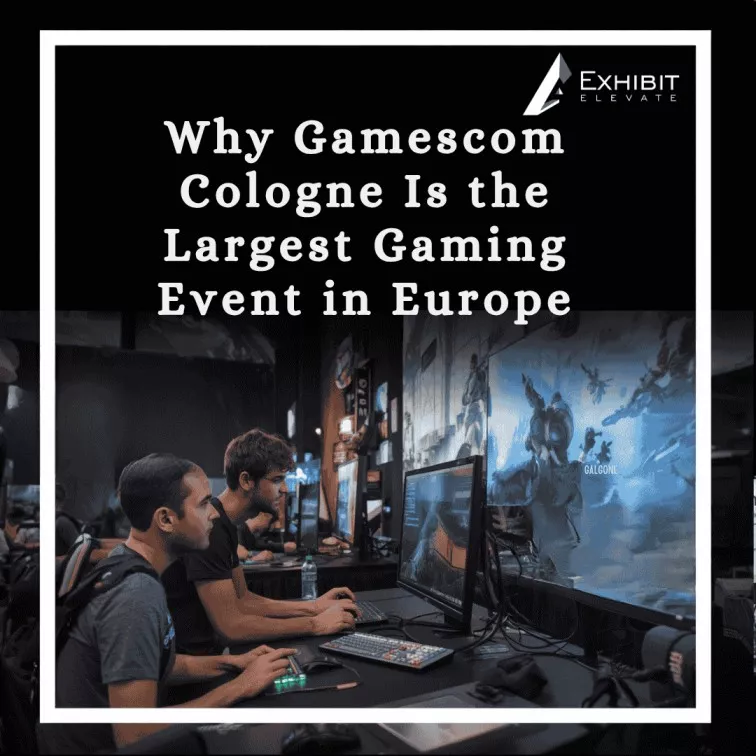
Why Gamescom Cologne Is the Largest Gaming Event in Europe?
Let me paint you a picture. It’s August in Cologne, Germany. The streets are humming. Hundreds of thousands of people are coming into a single space – gamers, developers, brand managers, reporters, and IT businesses from over 70 nations. Inside, lights flash, enormous displays occupy entire walls, and brands are competing for every second of attention from a throng that has come particularly to be dazzled. Welcome to Gamescom Cologne — the biggest gaming convention in Europe, and honestly, one of the most spectacular displays. Now here’s the thing. If you’re in the pharmaceutical or healthcare industry, you might be thinking, “What does a video game expo have to do with me?” A lot, actually. Stick with us. So, What Exactly Is Gamescom? Gamescom is an annual video game expo held in August at the Koelnmesse exposition facility in Cologne, Germany. It’s not just the largest gaming festival in Europe – it’s the largest gaming event in the entire world. Here’s a sense of the scale: 357,000+ visitors attended Gamescom 2025 — from 128 nations More than 1,500 exhibitors from more than 72 countries set up at the event. During its run, the event got more than 630 million internet views. Opening Night Live got 72 million views on the internet alone. The arena has an amazing 233,000 square metres of exhibiting area. Those are not just numbers. That’s the kind of traffic and worldwide reach that most businesses wish they could have. When you go around this German gaming conference, you can see what a world-class display strategy looks like in real life. How did Gamescom get so big? It didn’t happen overnight. Gamescom was first held in 2009 at Koelnmesse, when the German Games Industry Association decided Cologne was the right home for a new flagship gaming event in Europe. The early editions were already impressive, but what kept it growing was the formula: one part trade show, one part public festival, one part game developers conference Europe. That combination — professional B2B on one side, passionate consumer engagement on the other — is the secret sauce. Unlike events that cater purely to industry insiders, Gamescom opens its doors to everyone. Publishers listen to developers. Publishers present games to fans. Fans create content that broadcasts the event via social media. It’s an entire ecology under one roof. After the fall of E3 (formerly the biggest gaming convention in the Americas), Gamescom emerged completely into the spotlight as the undisputed worldwide leader. And with the debut of Gamescom Latam in Brazil in 2024, the brand is now spreading beyond Europe totally. What Happens at Gamescom Cologne? Here’s what makes this event special – it’s not just one type of experience. It’s several, running simultaneously: Opening Night Live begins off the complete event on the evening before the public days. Hosted by Geoff Keighley, it’s a live-streamed global presentation of game trailers and announcements. Think of it as the Super Bowl of gaming reveals. The Entertainment Area is where major companies – Xbox, Capcom, Bandai Namco, EA — set up massive exhibition stands. Visitors line for hours to receive hands-on time with unreleased games. This is where exhibition design truly matters. The Business Area is closed to the public and runs as a proper trade environment – B2B meetings, publisher-developer negotiations, licensing conversations. This segment looks pretty much like any professional trade show you’d see in any business. Devcom is a separate event that occurs alongside the main event and is only for game developers. It is a dedicated game developers conference Europe format that draws studios from all over the world. The Cosplay Village, Artist Area, and Retro Zone keep the cultural heart of gaming alive, so the event will always have a sense of community. Why Cologne? What Makes Germany the Best Place to Live? Trade fairs are a big part of Germany’s rich history. Koelnmesse is one of the biggest exhibition centres in Europe, and it was built to host huge international events in many different fields. Cologne is easy to go to because of its transportation links, hotel capacity, and central location in Europe. Gamescom Germany has been successful not only because of its logistics, but also because of its continual investment in the event’s identity. The city loves it. Every August, pop-up gaming shops, esports bars, and gaming food trucks set up around the arena, making the whole city feel like an extension of the convention floor. That’s a lesson in and of itself: the best events don’t only happen within a venue; they also happen outside of it. What can other businesses learn from how Gamescom sets up its exhibits? This is where things get interesting for you. The rules for good exhibition design are the same whether you’re setting up a booth at a gaming event in Europe or getting ready for a pharmaceutical trade fair in Germany or the UK. Gamescom does them on a huge scale, which makes it easier to see the lessons. This is what the best exhibitors at Gamescom do, and you should do it too: 1. They start with an experience, not a product No one waits in line for a brochure. They wait in line for a demo, a chance to interact, and a picture they can take and share. The finest booths at Gamescom don’t simply show you a product; they let you use it. In the pharmaceutical industry, this means interactive models, augmented reality (AR) demonstrations of how drugs are delivered, or immersive visualisations of treatment pathways. 2. They think about how people will move around, not just how things seem. The worst thing you can do with 357,000 people on the floor is to make a bottleneck. The best exhibitors make their booths easy to get into, interact with, and leave. Managing flow is just as crucial as making a visual impact. 3. They put money into the stand itself as a way to show off their brand. The stands are the advertising during Gamescom. If you don’t build